Evidence-Based Bone Regeneration

The Science Behind
adbone®

adbone® synthetic bone grafts are built on over 15 years of biomaterial research — engineered to replicate the microarchitecture of human bone with reproducible, measurable performance that biological grafts cannot guarantee.

70%Max Total Porosity
400μmMax Macropore Size
Greater Mechanical Strength
CEMarked · ISO 13485
01
Osteoconduction
The interconnected porous scaffold guides migration and organisation of osteoblasts across the entire defect volume — not just the surface.
02
Vascularisation
Macro and micropores support capillary ingrowth, delivering oxygen, nutrients, and growth factors required for sustained bone formation.
03
Controlled Resorption
As new bone matures, adbone® is progressively degraded by osteoclast activity and replaced — leaving only native regenerated tissue.
β-TCP HAp Ca²⁺ PO₄ OH⁻ ~400μm macropore Calcium Phosphate Network
β-TCP & HApCalcium Phosphate Bioceramics
Material Composition

Engineered to Mimic the
Mineral Matrix of Bone

Natural bone is approximately 70% mineral — predominantly calcium phosphate in the form of hydroxyapatite. adbone® replicates this chemistry through a patented manufacturing process that controls phase composition, pore geometry, and interconnectivity at the microscale.

  • adbone® TCP — Pure β-TCP. Fully resorbable; replaced entirely by native bone. The preferred choice where complete graft turnover is the clinical goal.
  • adbone® BCP — 75% HAp + 25% β-TCP. Biphasic formula: HAp delivers long-term structural stability while β-TCP drives early bone ingrowth and rapid remodelling.
  • Patented microarchitecture. Multidirectional interconnected porosity engineered to maximise cell colonisation in three dimensions — not merely on the graft surface.
  • Hydrophilic surface chemistry. Rapid blood uptake delivers platelets and mesenchymal stem cells directly into the scaffold interior — augmenting osteoinductive potential without additional biologics.
Performance Data

adbone® vs Comparable Substitutes

Measured across the three parameters most predictive of successful bone regeneration. Data sourced from Medbone product specifications and published biomaterial benchmarks.

Total Porosity
adbone®70%
Comparable substitutes45%

Higher porosity = greater surface area for cell colonisation. A 25-point difference is clinically significant for 3D bone ingrowth.

Macropore Size
adbone®400μm
Comparable substitutes50μm

Pores ≥100μm are required for vascularisation. adbone® exceeds this threshold by 4× — enabling capillary penetration deep into the graft core.

Mechanical Resistance
adbone®3.0 MPa
Comparable substitutes0.5 MPa

6× greater compressive strength without sacrificing porosity — the result of Medbone's patented sintering and microarchitecture design.

Graft Classification

Why Synthetic Is the Optimal Choice

Bone graft materials are classified by biological origin. adbone® occupies the alloplastic (synthetic) category — offering the predictability, safety, and unlimited availability that biological grafts cannot guarantee.

Recommended
Alloplastic
Synthetic (adbone®)
Laboratory-produced calcium phosphate biomaterial with controlled, reproducible composition — manufactured under ISO 13485 with full batch traceability.
Zero disease transmission risk
Unlimited, consistent availability
Reproducible batch-to-batch quality
No ethical or religious concerns
No donor site morbidity
Autograft
Patient's Own Bone
Harvested from the patient — typically iliac crest. Considered the historical gold standard for osteogenic potential, but severely limited in volume.
Osteogenic & osteoinductive
No immune rejection risk
Donor site pain & morbidity
Very limited volume available
Requires second surgical site
Allograft
Human Donor Bone
Processed bone from a cadaveric or living donor — freeze-dried or demineralised. Widely used but carries inherent biological and ethical constraints.
No second surgical site
Larger volumes available
Disease transmission risk
Variable batch-to-batch quality
Ethical & supply constraints
Xenograft
Animal-Derived Bone
Typically bovine or porcine-derived, processed to remove organic components. Carries documented immunological and ethical limitations.
Similar mineral structure
Documented clinical history
Immune reaction risk
Zoonotic transmission concerns
Religious & ethical objections
Porosity Architecture

Why Porosity Is the
Critical Variable

Porosity is not merely a structural feature — it is the primary driver of biological integration. An interconnected pore network allows cells to migrate, blood vessels to form, and new bone to grow in three dimensions simultaneously. Without it, regeneration remains surface-level.

Total Porosity — adbone®70%
Total Porosity — Comparable45%
Macropore Size — adbone®400μm
Macropore Size — Comparable50μm
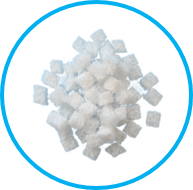
Granules
Granules
TCP & BCP
Block
Block
Interconnected pore network
Cylinder
Cylinder
Uniform porosity
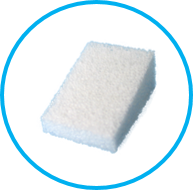
Wedge
Wedge
Anatomical geometry
Biological Mechanisms

How adbone® Works
at the Cellular Level

Osteoconduction

Scaffold-Guided Bone Formation

The interconnected porous architecture of adbone® acts as a three-dimensional template, physically guiding osteoblast migration, proliferation, and matrix deposition across the entire graft volume — not merely on its outer surface. Macropores of 100–400μm represent the critical size range for vascular and bone tissue ingrowth, and adbone® achieves this throughout its full structural depth.

Vascularisation

Angiogenesis Within the Graft

New blood vessel formation is essential for sustained bone regeneration. adbone®'s interconnected pore channels allow capillaries to penetrate deep into the graft core, continuously supplying oxygen, nutrients, and growth factors. Without deep vascularisation, even osteoconductive scaffolds fail at their centre — a limitation adbone®'s architecture is specifically designed to overcome.

Resorption Kinetics

Progressive Replacement by Native Bone

adbone® degrades via osteoclast activity at a rate matched to new bone deposition. Pure β-TCP degrades relatively quickly, making adbone® TCP the choice where full resorption is the goal. In BCP formulations, the HAp phase degrades more slowly, providing sustained mechanical support through the extended healing phase — the key clinical advantage of staged biphasic resorption.

Hydrophilicity

Blood Uptake & Biological Activation

The hydrophilic surface of adbone® draws blood rapidly into the pore network upon implantation, delivering platelets, growth factors (BMP-2, TGF-β, PDGF), and mesenchymal stem cells directly to the scaffold interior — effectively augmenting osteoinductive potential without requiring additional biologics. Surgeons may also mix adbone® with bone marrow aspirate to further enhance performance in complex defects.

Quality & Compliance

Manufactured to the Highest
Regulatory Standards

Medbone operates under a certified Quality Management System and holds CE marking across the full adbone® range. Every batch is traceable, reproducible, and manufactured under strict GMP controls — ensuring clinicians receive consistent performance with every implantation.

🇪🇺CE MarkedClass III Medical Device
🏭ISO 13485Quality Management System
🧪ISO 10993Biocompatibility Tested
🔬GMP CompliantControlled Manufacturing

Ready to explore adbone® for your practice?

Tarsal Medical provides clinical support, product samples, and full technical documentation across South Africa.